Friday, November 29, 2019

Dissappearing in alphabetical order

An Enquiry Concerning Human Understanding


David Hume cuts off logic from causality stating that all conceptions of reality are based on observations. These observations do not have any correspondence to the cause we associate these observations. Ultimately, we are left with a choice concerning causality.


When a cause is not part of some underlying nature we almost pick and choose it as if from a menu. This sounds like how we explain culture rather than some matter of fact.


The Amazing Shrinking Woman (1981) 

The movie is a joke about consumerism. Oddly it relates to Hume's comments on observation but in an inverted way. The woman who shrinks becomes a victim of some admixture of all the chemicals she owns. Her shrinking body has no known cause other than her purchases. Hume notes that when we try to get to the root of a cause we finally rest at some object or memory. Hume also notes that observations have a weakened impression on us if it from some memory and not currently being an experience.


The well-marketed items do not fade. In fact, the colors of the packaging are the bright advertising colors throughout the film. What fades is the observer and there is even a plot by some mad scientists to infect this inverted observer disorder to the rest of humanity as the final warped incarnation of capitalism.

Tuesday, November 19, 2019

No Creatures Hiding

David Hume's starting point is an object or a memory. He does seem to allow general properties that can be deduced like the three sides of a triangle but that is more or less trivial. He envisions a creaturely role for humans.

It is not as if past thinkers ignored creaturely but they allowed us to think beyond it as well to something much better. This is generally conceptualized as God or something like Hegel's 'spirit'.

According to Hume, we make judgments based on observations and memories and we act responding to them. However, our response is in no way integral with observations and memories. Because this connection between memory and judgment lacks intrinsic necessity we are proposed as thinkers who cannot get our bearings and have no compass or coordinates.


In a curious way, this way of thinking reminds me of economics. There are a lot of conjectures based on statistical data. Who would define the true meaning of the stock market in a Socratic dialogue? It may be an unfair statement but maybe Hume is not trying to find deep rooted truths but prepare us for a society governed by markets and modernity.

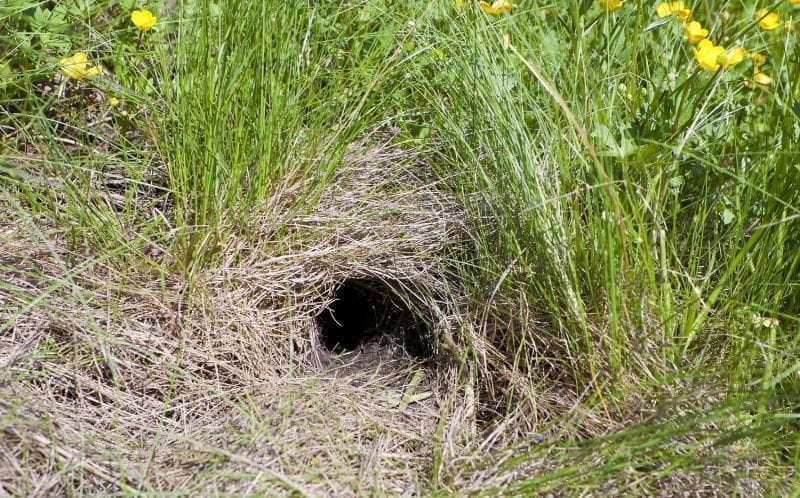
Very like finding a hole possibly made by an animal, but where we do not see any creature there. The hole seems mysterious and without origin and at best vacant.

Monday, May 18, 2015

The beauty of a visitor that can be plainly seen

Book II On the Soul Aristotle

Book two focuses on the senses and their role with the soul and the body. We find they are temperamental and tied to physical phenomenon but translate them to our particular way of sensing them that is somewhere else from the physical objects we perceive.

The senses make up a lot of the souls parts and we find these parts are used by the soul but are not required for the soul to exist. But while talking about the souls parts in sensation we early on find a fundamental use for the senses which is to find food and water. While this is the most elemental of goals for the senses it is a stepping stone to view the senses as likewise a nutritive component for the soul. As the body needs these material to form into the body the soul needs sensation fill thought with it's otherworldly material to give shape to what would otherwise be blank murmurs of thoughts.  

The senses are characterized by their ability to be in consistent in certain ways to they can be receptive to the world they perceive which is constantly in flux. In this matter they are hard to describe as one does a geometric object which is pure and never changing. The senses do not sense everything but only a select spectrum and some animals sense in different ways. A living thing has to maintain the things they sense with and have to artfully keep them from sensing in abundance to keep from destroying their senses such as looking at an overly bright object like the sun.

As we go through the senses we find they are in some ways uncomparably different and other time are curiously alike. Sight and smell appear to be sense and a distance while taste and touch sense very directly. Our sense cannot be categorized in one way and considering these basic functions of how we perceive reality requires a nuanced attention.

So far our sense are describe in very simple terms in regards to how they are used. Cognitive aspects of the soul will be discussed in the next book, but here the generally a soul that relies on the senses more so than thought is lusty and hungry and also tied to pleasure and pain.

Chapter 10 Elective Affinities Johann Goethe

So far we have been in this aristocratic garden that may not be paradise but never the less made to be capricious and enjoyable. And as guests have been invited to stay for a long period of time, the garden has been shaping into something more like paradise itself rather than a hobby garden. Each of the married couple starts to have budding passions for the other guest that was invited to stay.

While it plain as what was developing, these feelings seemed as innocent as the beauty of a garden plant. We realize that in matters of cooperation great beauty comes about simply by the two unmarried couples being next to each other. While it is easy to assume what will develop will be debaucherous it is easy to entertain that what is taking place at this moment is sweet and a pastoral.

There is very little unease until we meet an unexpected guest who was our symbol of concord earlier. On his first visit he reprimanded the married couple for trying to foresee the consequences of the previous guests at their house. But as he learns about the guests that will dine with them shortly he becomes obstinate and foreboding. These upcoming guests have a pulse on desire and in his mind subversive towards married. There is a sense of the tension that will soon come to sit at their table.

These guests are themselves a couple who pose to have a realistic view on love and marriage. The seem to have from scientific observation statistical malaise about a person's ability to stay committed and not become attracted to someone else or to be able to see in people who is a genuinely suitable partner for marriage. They take on a guise as devilish as if their blunt conversation on the foolishness of marriage begins to bother their hosts, but there is also this sense that awareness is budding just as previously passions have been.

This is exactly what happens but awareness first descends upon Charlotte who is more astute and cunning. But her awareness is also made unmistakeable by the baroness who makes it impossible for her to suppress what she sees as plain. She cannot ignore any longer how her husband dotes on the young Ottille and she cannot ignore her own feelings which have just become apparent for the other guest. Eduards child-like approach to concealing love conceals himself from seeing his wife's new love interest which means Charlotte is the first stung by what these Baudelaire like cupids have vulgarly brought to light and have struck a displeasing chord that can be easily heard. 

The garden that was once a place for pleasure and object the home owners used as an object to transform into beauty is now transformed. The hut that was garishly decorated but also planned as a space to entertain guests now serves as a space for Charlotte to be alone with her conflicting emotions. She see her husband in love with someone else and realizes she is too. It is here where she sees an opportune spot to grieve and release her unwelcomed awareness. 
A moving magical head

Book 1 On the Soul Aristotle

Aristotle starts by broadening what can be considered a soul and some approaches that have been in the past. This book we discover that it's hard to come with a simple explanation. There seems to be some consensus that the soul cause moving things to be in motion and is integral to a beings ability to sense. But even this can be a suspicious notion to depend on.

When we consider other approaches we find thinkers favoring a material approach that can be promising as it seems there's obviously matter. There is also thinkers favoring the intellect as the soul which could sound like a good idea, and then kind of quirky notions like the soul arising from harmonious ratios that ultimately reduce the soul to a number.

In this book we don't really come to a conclusion on one thing over another but more or less are being prepared to scramble expectations of something straight forward theory. Aristotle summons these past thinkers but in a way humiliates them by announcing their theory and then in a matter of sentences over turning what some thought was a solid answer to a complicated matter.

Aristotle has not said this is so but we do keep returning to the themes of motion and sensation that will undoubtedly play an important role as the thought about the soul continues. 

The Ram, The Cat, and the Twelve Wolves Russian Fairy Tales A. Afanasev

This collection of stories seems to run in strange themes where the stories kind of have something related to them to the one that follows. This story is a familiar story where a character finds a severed head while going somewhere. This head is a bit less magica...

Wednesday, April 1, 2015

Marrying a burning head

The Embodied Soul & The Thinking Soul Introduction to 'On the Soul'  Joe Sachs

Here we are prepared about the soul's relation to the material it inhibits and influences. We are asked to think of the the relationship not as two different things where the soul and body are separate. The soul here is meddled with the body even though it has a distinctness of its own that can be elaborated on. We also hear about a material point of view that neglects the soul which is refuted.

There is also the quality we associate with the soul which is thoughtfulness and the author briefs us about Aristotle's approach to the general and particular uses of thought. He views thought in a divided way which don't conflict each other but one causes the other and the other gives content. We consider things as whole but there is an alien quality to this way of thought. It seems to come from without us and is most evident when we contemplate without focusing on perception which gives it a passive quality while still being active. The other end is when we consider things in particular parts and this is active and requires us to perceive outside ourselves.

The author also wants us to consider the role of thinghood in the way Aristotle would like us to. While we consider our surroundings for usefulness as tools, contemplating the souls of others has a different goal. Seeing thing as a complete thing focuses on the thing itself in a pure way that does not lead to goals other than understanding it as itself.

Nodey Russian Fairy Tales Aleksandr Afanasev

This particularly strange tale gets set in motion by a errant burning head. This head is put in a box, mistaken for a gift and then licked. The person who licks the box gets pregnant and fast birthing the child in a matter of days. The child has abnormal strength that tames wild things that a normal person wouldn't dare but at the same time his strength would destroy a village. He ends ups being banished

It's hard to miss the fairy tales psychological references while we read although it's not exactly clear what the stories seem to be referencing.

Tuesday, March 31, 2015

Not knowing what's for dinner

Recognizing the Soul Introduction to 'On the Soul'  Joe Sachs

We start off with a curious dilemma--are we trying to recover the idea of the soul or describe something that is inherent in ourselves but is mysterious. The author asks us to consider the latter and insists we cannot discover a notion of something we don't already see plainly.

Seeing the soul is referred as one experiences the world through the senses. Our senses have a way that presents us objects in a matter of fact way yet allow us to discover properties that are hidden and cannot be apparent by merely glancing at them.

This sensing is not like a machine that measures data, but is desirous and directs attention by a self-guided force that will create forms whether it is understood or not. We come to a conclusion that to come to terms with this means we recognize the soul but sacrifice absolute clarity to witness it at work.

This analogy of the senses seems cheeky as philosophy seems to be of the mind but when we focus on sensation we discover the mind at work. The author reminds us of the foolishness of supposing the mind has all the material of the world we sense in it. The extreme form of this would have the view that the senses fabricate an exact material copy as if they were printers in some factory.

Our perception of things can be seen as observations of material but we assign properties to these material things that evade material origin. Color is our own sensation made to terms by our senses and not in what we sense. We also can observe how living things strive to a certain form and how the senses assist this. How the senses come together and how a living thing uses them to create its being is posited as what we call the soul.

We can recognize this within ourselves and as well as in other living things. There is a curious fascination with the recognition of nature's soul. There is also disparaging remarks about reducing nature to mathematics and the inevitable inward destruction of our own souls as well. Our ability to be fascinated by nature and feel a familiarity with it is in tuned with our ability to see nature with in ourselves.

The Fox and the Crane Russian Fairy Tales Aleksandr Afanasev

The fox and the crane here enter into some kind of relation that is centered on hospitality. The fox is the first to host a meeting but because of their different mouths only the fox can eat. He is desirous and strangely eats all the food with little concern for the needs of his guest.

But the crane still acts as if it is a cordial evening and invites the fix over another day. This evening is flipped but still lacks empathy. The hungry fox is beset that he is on the other end and the relationship stops there.

Here we have hunger and politeness together without a sense of harmony that first seems like the beginning of something gets stopped short because they can only satiate their appetite one at a time. The hungry fox seems opportunistic while the crane seems to lack wisdom to make manners useful. And what is apparent with both of these characters is their willingness to try a friendship that has tragic flaws and humiliates them

Thursday, February 5, 2015

Falling asleep and waking in jail

Freud and Fiction Introduction to Theory of Literature Professor Paul Fry

After discussion deconstruction we are taking back to psychological concerns in literature. The lecture concerns two parts of human behaviour which is repetition and a preoccupation with one's death. When we contemplate death we are in a strange way considering our end like one does the goal of a project or in special relevance, to a story.


In fact, we consider that stories often contain elements that are not pleasurable to read and trying to gather a meaning can be laborious on the mind. It causes us to pause and think why we are drawn to this rather than towards things that bring us joy. Like near the beginning of this survey we are reminded that the study of meaning comes from people who want meaning to be complicated and are serious about it. But this has a more Hemingway-ish notion to it in that we repeat uneasy aspects to master them and to die the way we choose. In this round about way we are stuck in a structuralist mindset while setting precedent that form comes about from psychological processes. We have a almost deterministic view of beginning, middle, and end.

St. Anastasia The Golden Legend Jacobus de Voragine

This tale is is oddly and severely neurotic. The reactions the characters have are shrouded in myth they are set in motion by something rather ordinary--pairing of incompatible lovers. Love here seems to be treated arbitrary as Anastasia is paired with one stranger after another predestined to end in tragedy. The unrealistic pairings have these strange effects on people either causing them to fake sickness, fall into a deep sleep in a tense moment, have clothes that cannot be taken off by force, or thrown into dungeons.


There is also a rapid pace where these things keep happening as if from a fevered mind of a story teller. The overwhelming feeling is a searing one rather than a sense of wisdom being granted or being washed in myth.